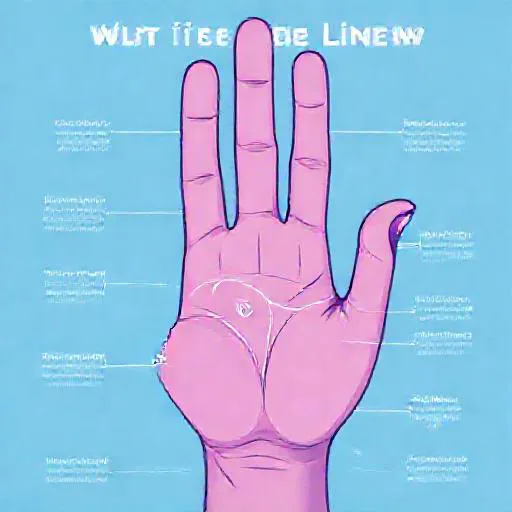
Meaning of the life
What Is the Life Line, Exactly?
So you're staring at your palm wondering, what does the life line on palm mean? You're not alone — it's one of the most Googled questions in all of palmistry. The life line is one of the three major palm lines, sitting right alongside the head line and the heart line. You'll spot it curving around the base of your thumb, kicking off between your thumb and index finger and sweeping down toward your wrist. On most hands, it makes a gentle arc that cradles the mount of Venus — that fleshy pad at the base of your thumb.
In palmistry tradition, this line ties into physical energy, grounding, stamina, and major life transitions. Think of it as a snapshot of how you move through the world: your resilience, your sense of stability, and how you handle upheaval. And here's the thing — when people ask what does the life line on palm mean, a good hand analyst never reads it in isolation. They'll cross-reference it with the head line, the heart line, the fate line, and the overall hand shape to build a fuller picture.
A Quick Note on Hand Anatomy and Dermatoglyphics
From a purely anatomical angle, the life line forms while you're still in the womb, around the same time as other major palmar creases. Scientists who study dermatoglyphics — the study of skin ridge patterns — note that these creases develop due to fetal hand movement and genetic factors. So while palmistry isn't a hard science, the line itself is a real, measurable feature that's unique to you. That's part of why figuring out what does the life line on palm mean is so much fun to explore.
How to Find Your Life Line in 60 Seconds Using Simple Palm Reading Steps
Not sure where to look? Follow these quick steps:
- Step 1: Hold your dominant hand palm-up, in good lighting.
- Step 2: Locate the crease that starts between your thumb and index finger.
- Step 3: Follow it as it curves around the base of your thumb toward your wrist.
- Step 4: Compare it with your other hand — many practitioners read the dominant hand as your present and active life, and the non-dominant hand as your inherited tendencies.
Once you've found it, you can start reading its length, depth, curve, and any breaks or branches. Let's walk through each of these features.
Length of the Life Line and Physical Vitality Myths
Here's the myth-buster: a short life line does not mean a short life. In palmistry, the length of the life line is more about the scope of your energy and your appetite for experience. A long, sweeping line that reaches toward the wrist is often read as a sign of steady stamina and a strong connection to physical vitality. A shorter line? It may suggest someone who channels energy in focused bursts rather than a steady marathon — think sprinter energy rather than endurance runner energy. Neither is "better."
Many experienced readers also look at where the line ends. A line that curves outward toward the wrist may indicate a love of travel and new experiences, while one that stays close to the thumb might suggest a home-centered, grounded personality. This is a big part of what does the life line on palm mean — context and placement matter way more than length alone.
Depth and Clarity of the Life Line in Modern Wellness Coaching
A deep, well-defined life line is traditionally associated with robust physical energy and a strong sense of purpose. If your line is faint or broken up, don't panic — hand analysts often interpret this as fluctuating energy levels, sensitivity to stress, or a life full of reinvention. Some practitioners view a faint line as a sign that you recharge through rest and introspection rather than constant activity.
In 2026, many modern palmistry practitioners combine this reading with wellness coaching. The idea? Use the line as a conversation starter about burnout, rest, and sustainable energy habits. It's less "fortune telling" and more "self-reflection with a side of ancient symbolism."
Curves Around the Mount of Venus and Passionate Personality Traits
The way your life line arcs around the mount of Venus matters a lot. A wide, generous curve that creates a large Venus mount is often linked to warmth, passion, and a big appetite for life — food, love, art, connection. A narrower curve can indicate someone more reserved or focused. Again, context is everything, and a skilled reader will look at the whole hand when decoding what does the life line on palm mean.
Breaks, Gaps, and Overlaps as Life Transition Markers
This is where people get nervous — but let's reframe it. Breaks in the life line are commonly interpreted as turning points: a career change, a move to a new city, a relationship shift, or a period of personal transformation. If the line overlaps at the break, some traditions see it as continuity through change — like a bridge carrying you to the next chapter. If there's a clean gap, it may symbolize a clean break and a fresh start.
Here's the key takeaway: a break isn't a warning. It's a chapter marker. Many readers describe it as the palm's way of saying, "Something shifted here — and you kept going."
Branches, Fine Lines, and Support Lines in Palm Reading
Small branches that shoot off the life line often point to specific themes. Upward branches may suggest ambition, growth, or new opportunities, while downward branches can hint at stress, travel, or letting go of something. Fine parallel lines alongside the main life line — sometimes called support lines — are traditionally seen as a sign of protection, strong relationships, or inner resilience. Some practitioners call them guardian lines, though the terminology varies across traditions.
Chains and Islands as Emotional Growth Chapters
If your life line looks like a chain of small linked loops, palmistry may interpret it as periods of scattered energy or emotional turbulence. "Islands" — small enclosed shapes within the line — are often read as chapters of challenge or recovery. Modern readers tend to frame these as opportunities for growth rather than doom. Think of them as plot twists in your personal story. When someone asks what does the life line on palm mean and their line looks chained, this is usually the answer they need to hear.
What the Life Line Is NOT in Palmistry and Hand Analysis
Let's be crystal clear, because this matters more than anything else:
- It is not a lifespan predictor. No serious palmistry practitioner in 2026 claims to read your date of death from your palm. Anyone who does is selling fear, not insight.
- It is not fixed. Palmar creases can change subtly over time due to aging, skin elasticity, and even repetitive hand use. Many traditions believe the lines reflect your current state, not a locked-in destiny.
- It is not a medical diagnostic tool. Palmistry is a symbolic and cultural practice, not a substitute for medical advice. If you have health concerns, talk to a qualified professional — full stop.
In fact, many wellness-focused practitioners emphasize that hand analysis is best used as a mirror for self-reflection. The line doesn't tell you what will happen; it invites you to think about how you're living.
Life Line vs Head Line, Heart Line, and Fate Line Connections
To read your life line accurately, you need to see it in context. Here's how it relates to the other big players:
The head line runs horizontally across the middle of the palm. Together with the life line, it forms the shape of the letter "M" in many hands — a pattern some practitioners call the "M" mark. Where the head line and life line connect at the start can suggest how closely your thinking is tied to your sense of security and family roots. A clean separation often indicates early independence and self-reliance.
The heart line sits above the head line and relates to emotional style. A strong, deep life line paired with a clear heart line is often read as balanced energy — someone who can give and receive warmth without burning out.
The fate line (sometimes called the destiny line) runs vertically up the center of the palm. Where it intersects the life line is often interpreted as a turning point related to career or life direction. Some readers see a strong fate line crossing the life line as a sign of external events shaping your path — a promotion, a move, or an unexpected opportunity. Cross-referencing all four lines gives you a much richer reading than staring at the life line alone — and honestly, it's the only way to truly understand what does the life line on palm mean in your specific case.
Common Life Line Patterns at a Glance for Quick Palm Reading
Here's a quick reference you can use the next time you look at your palm:
- Long, deep, sweeping curve: Strong vitality, steady energy, grounded nature.
- Short, faint line: Focused energy bursts, sensitivity, need for rest and recharging.
- Broken with overlap: Major life transitions handled with continuity and resilience.
- Chained or islanded: Periods of scattered energy or emotional growth chapters.
- Many upward branches: Ambition, drive, and a desire to grow.
- Support lines running parallel: Inner resilience, strong support systems, a sense of protection.
- Wide arc around Venus mount: Warmth, passion, love of life and connection.
Keep in mind that every hand is unique. Two people with similar-looking life lines can have completely different readings once the rest of the hand is factored in.
Why the Life Line Captivates Us in Modern Palmistry Culture
There's something deeply human about wanting to read our own story in our hands. Palmistry has roots in ancient traditions across multiple continents, and in 2026 it's enjoying a fresh resurgence — not as a replacement for science, but as a form of personal symbolism and mindfulness. Many people use palm reading as a journaling prompt: "What does this line remind me to pay attention to?" That's really the heart of what does the life line on palm mean — it's a reflection tool, not a crystal ball.
An experienced practitioner will tell you the same thing: the value of palmistry isn't in prediction. It's in reflection. The life line invites you to think about your energy, your resilience, and the chapters you've already lived through. That's a pretty powerful mirror to have literally at your fingertips.
How to Do a Simple Self-Reading with Life Line and Hand Shape Analysis
Want to try a mini-reading right now? Here's a simple, grounded approach:
- Observe without judgment. Look at the length, depth, and curve of your life line. Note what stands out before you assign any meaning.
- Check for transitions. Look for breaks, chains, or branches. Where do they fall along the curve? These often correspond to life phases.
- Cross-reference. Glance at your head line, heart line, and fate line. Do they support or contrast the life line's story?
- Compare hands. Look at both palms. Differences between dominant and non-dominant hands can highlight growth over time.
- Journal it. Write one sentence about what the line suggests to you. You might be surprised by what comes up.
If you want a deeper reading, consider booking a session with a reputable hand analyst or palmistry practitioner. In 2026, many offer virtual consultations, which makes it easier than ever to explore this ancient art from home — and to finally get a personalized answer to what does the life line on palm mean for you.
Whether you're a total beginner or someone who's been fascinated by palmistry for years, the life line offers a wonderful entry point into hand analysis. Pair it with the head line, heart line, and fate line, keep an open mind, and remember: the most interesting reading is the one that helps you understand yourself a little better. Now go take a look at your palm — that curve around your thumb has quite a story to tell.