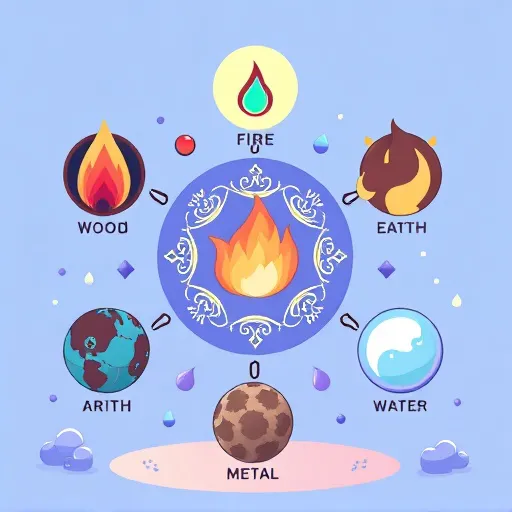
Five elements basic
What Are the Five Elements, Exactly?
Before we get into the really juicy stuff — like how do the five elements interact and balance — let's quickly define who the "players" actually are. The five elements — known in traditional systems as Wood, Fire, Earth, Metal, and Water — aren't literal physical substances. Nope, you're not balancing actual logs and buckets of water here. Think of them as energy phases or archetypes that describe how things grow, transform, and settle. Understanding how do the five elements interact and balance starts with knowing each one's personality, so here's the quick snapshot:
- Wood is all about growth, expansion, and new beginnings. Picture spring, sprouting plants, and fresh ideas bursting out of nowhere.
- Fire symbolizes transformation, passion, and visibility. Think summer heat, excitement, and those creative bursts that keep you up at night.
- Earth stands for stability, nourishment, and grounding. Think late summer harvest, rich soil, and that cozy sense of home.
- Metal reflects structure, clarity, and refinement. Think autumn, sharp edges, and the art of letting go of what's unnecessary.
- Water embodies flow, wisdom, and rest. Think winter, deep reflection, and the quiet accumulation of energy.
These five categories form a dynamic framework used in traditional medicine, interior design, wellness practices, and even business strategy. But here's the thing — the real magic isn't in the definitions. It's in how do the five elements interact and balance with each other. That's where things get genuinely fascinating.
The Generating Cycle: Nourishment, Support, and the Productive Flow of Energy
In the generating cycle (also called the productive cycle), each element feeds and supports the next one. It's like a relay race where energy passes smoothly from one runner to the next — no fumbling, no dropped baton. Here's the flow, and notice how do the five elements interact and balance through this loop:
- Wood feeds Fire — wood burns to create flame. In life terms, growth and planning fuel passion and action.
- Fire creates Earth — ash becomes soil. Passion and transformation eventually settle into stability.
- Earth produces Metal — minerals and ores are found within the earth. Stability and nourishment give rise to structure and clarity.
- Metal enriches Water — condensation forms on cool metal surfaces. Structure and refinement lead to wisdom and flow.
- Water nourishes Wood — water helps plants grow. Rest and reflection fuel the next cycle of growth.
See how this creates a continuous loop? No element gets left out, and each one depends on the others. When this cycle is strong, life feels supported, projects flow, and health tends to thrive. A seasonal wellness routine, for example, often leans on this cycle — eating foods that support the upcoming season's element, adjusting sleep patterns, and shifting activity levels. This is one of the clearest everyday examples of how do the five elements interact and balance in practice.
The Controlling Cycle: Regulation, Balance, and Keeping Things in Check
If the generating cycle is all about support, the controlling cycle (sometimes called the regulating cycle) is about keeping things in check. Think of it as the thermostat of the system — it prevents any single element from running wild. Here's how do the five elements interact and balance through this regulatory dance:
- Wood controls Earth — tree roots break through soil. Too much growth can disrupt stability, so wood keeps earth in check.
- Earth controls Water — soil absorbs and directs water. Stability prevents water from becoming chaotic or overwhelming.
- Water controls Fire — water puts out flames. Reflection and rest temper passion and prevent burnout.
- Fire controls Metal — heat softens and melts metal. Transformation keeps structure from becoming rigid.
- Metal controls Wood — metal tools cut and shape wood. Clarity and structure prevent growth from becoming unruly.
At first glance, "controlling" sounds negative, right? But it's actually essential. Without it, one element would dominate and throw everything off balance. The controlling cycle ensures that each force has limits — which is exactly what keeps the system healthy. So when people ask how do the five elements interact and balance, the honest answer is: it takes both cycles working together.
Over-Control and Under-Control: What Happens When the System Gets Out of Sync
Now let's tackle the heart of the matter. How do the five elements interact and balance when things go wrong? The short answer: imbalance shows up in two main ways — over-control and under-control — and both have practical consequences.
When an element becomes too strong, it can over-control the element it's supposed to regulate. For example, if Wood energy is excessive, it can overwhelm Earth, leading to restlessness, difficulty grounding, or instability in routines. In interior spaces, this might show up as an environment that feels chaotic and lacks cozy corners. Similarly, too much Water can smother Fire — think of someone so focused on rest and reflection that they lose motivation and drive. Too much Metal can chop away at wood's growth, resulting in stalled progress and creative blocks.
The opposite problem happens when the controlling element is too weak. If Wood is deficient, it can't keep Earth in check, and stability may morph into stubbornness or stagnation. If Fire is weak, Metal goes unchecked and structure becomes rigidity — rules without flexibility. In both cases, the goal isn't to force one element into submission but to restore the natural rhythm of the cycles. A holistic balance framework uses the generating and controlling relationships to gently nudge the system back toward equilibrium. That's the real answer to how do the five elements interact and balance — it's never about force, always about rhythm.
Seasonal Living, Interior Design, and Personal Productivity: Real-World Applications
This might all sound abstract, but the five elements are surprisingly practical. Traditional wellness systems map the elements to seasons: wood to spring, fire to summer, earth to late summer, metal to autumn, and water to winter. A seasonal detox plan or seasonal eating guide often follows the generating cycle — you support the current season's element while gently preparing for the next. In late summer (Earth), for instance, you might focus on grounding foods and routines to nourish stability. As autumn (Metal) approaches, you introduce more structure and clarify what to release. This is how do the five elements interact and balance in your daily habits.
Designers who work with traditional balance concepts use the five elements to create rooms that feel cohesive. A balanced home environment might mix wood furniture (growth), fire accents like warm lighting (passion), earth tones (grounding), metal fixtures (clarity), and water features (flow). The key is proportionality. Too much wood and fire, and a room feels overstimulating. Too much metal and water, and it feels cold and clinical. Understanding how do the five elements interact and balance helps designers know when to add a regulating element — like introducing earth tones to soften an overly energetic space.
Ever notice how your productivity ebbs and flows? The five elements offer a language for that. A productivity rhythm might look like this: wood energy for brainstorming and planning, fire energy for execution and visibility, earth energy for consolidation and stability, metal energy for refining and editing, and water energy for rest and reflection. When someone feels stuck, a practitioner might ask: is there too much control from one element? Too little support from another? The answer often lies in adjusting how do the five elements interact and balance rather than pushing harder.
Relationships, Teams, and the Balancing Element That Mediates Conflict
Here's a fascinating angle: the five elements also describe interpersonal dynamics. In a team setting, you might have a "wood" person who's always pushing for growth, a "fire" person who brings energy and visibility, an "earth" person who keeps everyone grounded, a "metal" person who focuses on quality and structure, and a "water" person who brings wisdom and reflection. When these personalities interact well, they generate a powerful cycle of support. But when one dominates — say, a fire-heavy leader who overwhelms the metal-focused quality checker — the controlling cycle can turn into over-control. A team harmony assessment based on these principles can help identify where how do the five elements interact and balance needs adjusting.
One concept that often gets overlooked is the balancing element — an element that acts as a mediator when two others are in conflict. For example, if Wood and Earth are clashing, Fire can sometimes serve as a bridge because wood feeds fire, and fire creates earth. This creates a smoother transition rather than direct friction. A harmony restoration strategy often uses this indirect approach because it's gentler and more sustainable. So the next time you wonder how do the five elements interact and balance during conflict, remember: sometimes the smartest move is strengthening the mediator, not the fighters.
Common Misconceptions and the Dynamic Equilibrium of Wood, Fire, Earth, Metal, and Water
Let's clear up a few myths that tend to confuse people. Myth 1: the elements are literal substances. They're not — they're metaphors for energy phases and change. Myth 2: balance means equal amounts of everything. Not true. Dynamic equilibrium is context-dependent — a winter environment naturally has more Water energy, and that's appropriate. Myth 3: the controlling cycle is bad. Quite the opposite — without regulation, the system would collapse into chaos. Myth 4: you need an expert. While practitioners add nuance, the basic principles of how do the five elements interact and balance are accessible to anyone willing to observe patterns in their life, home, and work.
So, how do the five elements interact and balance? The answer lies in the interplay between the generating and controlling cycles. The generating cycle nourishes and supports, ensuring continuous flow. The controlling cycle regulates and tempers, preventing any single force from dominating. Together, they create a self-regulating system that's remarkably elegant. When you understand how do the five elements interact and balance, you gain a new lens for observing your life — noticing when your environment feels off, recognizing seasonal shifts in your energy, and seeing interpersonal dynamics with more compassion and clarity. The next time you feel out of sync, ask yourself: which element is running the show, and which one needs a little support? You might be surprised how often the answer reveals itself — and how quickly a small adjustment can restore the flow.