Beginner feng shui h
What Feng Shui Actually Means (Without the Overwhelm)
So you've heard about feng shui and you're curious—but also maybe a little skeptical, or just plain confused by all the energy flow talk. Here's the good news: feng shui home layout for beginners is way more practical than it sounds. At its core, feng shui is simply the study of how qi (or chi)—that invisible energy moving through your space—affects how you feel and function. The whole idea is to encourage smooth, balanced energy flow and steer clear of stagnation or harsh, rushing currents. Picture it like arranging a room for great conversation instead of awkward silences.
Modern practitioners—including seasoned interior designers and wellness consultants—often describe feng shui as "environmental psychology with a few thousand years of field testing." A residential layout consultant will tell you it's less about superstition and more about pattern recognition: certain furniture arrangements make people feel supported, while others quietly create stress. That's the lens through which any feng shui home layout for beginners should be viewed. You're not memorizing magic formulas—you're noticing what arrangements feel right.
For newbies diving into feng shui home layout for beginners, the single most important concept to grab is the commanding position. This is the spot in a room where you can see the entrance without being directly in line with it. In a bedroom, that means putting your bed on a solid wall, diagonally across from the door, so you can see who walks in. In a home office, it means angling your desk so the doorway is in view but not directly behind you. This one principle solves a huge chunk of layout problems—and it's where every feng shui home layout for beginners guide should start.
The Bagua Map and Compass Method: A Beginner-Friendly Compass for Life Areas
You'll hear a ton about the bagua map—basically a grid you overlay on your home's floor plan that assigns different life areas like wealth, health, relationships, and career to specific zones. There are two main ways to apply it, and understanding both helps any feng shui home layout for beginners make sense. The classical compass method uses a compass reading (a luo pan) to align zones with actual directions—more complex, usually requiring a pro. The Western/Black Hat method aligns the bagua with your front door, which is way easier for beginners to apply.
For a first-timer working on a feng shui home layout for beginners, the door-aligned method is far more practical. Stand at your front door and map the grid so the bottom-center square (career and life path) lines up with your entrance. From there, the top-left becomes wealth, the top-center becomes fame and reputation, and so on. Here's the thing—don't stress about getting every zone perfect. A feng shui layout practitioner will tell you that intention matters as much as precision. If you know your health zone sits in the center of your home, you'll naturally start keeping that area clean and well-lit. That awareness alone creates change—and that's the real magic of feng shui home layout for beginners.
The Entrance and Front Door: Your Home's Mouth of Qi and Energy Flow
In feng shui, the front door is where energy enters. A well-maintained entryway sets the tone for the entire home. Keep the door in good repair, make sure the handle works smoothly (a sticky lock supposedly represents blocked opportunities), and clear away shoes, mail piles, and umbrellas. Add a mirror if you want to visually expand a cramped entry, but avoid placing it directly opposite the door—some traditions say this pushes energy back out before it can circulate. A small plant or a bowl of fresh fruit near the entrance is a classic, welcoming touch that any feng shui home layout for beginners tutorial would approve of.
Living Room Furniture Layout: Where Gathering Energy and Conversation Collect
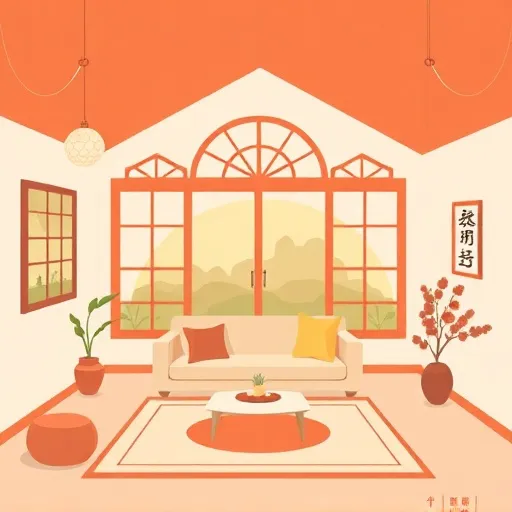
The living room is the social heart of the home. Arrange furniture in conversation-friendly groupings—an L-shape or U-shape rather than a straight row against the wall. This encourages connection and keeps energy circulating rather than pinned to the perimeter. Use a balanced furniture layout with pairs where possible: two chairs flanking a sofa, matching side tables, symmetrical lighting. That sense of stability is a cornerstone of any solid feng shui home layout for beginners approach.
Avoid placing the sofa with its back to the door if you can help it—a commanding position for seating means you can see entrances comfortably. Electronics deserve a mention too. A screen-heavy living room can feel draining. Try creating at least one corner that's screen-free—a reading nook or a spot for conversation. In 2026, with smart home devices everywhere, this "digital-free zone" concept has become a genuine wellness trend, and feng shui practitioners have embraced it enthusiastically. It's a perfect example of how feng shui home layout for beginners principles stay relevant.
Bedroom Bed Placement: The Most Important Room for Rest and Relaxation
Feng shui places enormous emphasis on the bedroom because sleep quality affects everything else. The bed placement rules here are worth following, and they're the heart of feng shui home layout for beginners advice: place the bed against a solid wall with a headboard for support; position it in the commanding position—visible from the door but not directly in line with it; avoid sleeping with your feet pointing directly at the door; and keep space on both sides of the bed if possible (a "cozy squeeze" on one side is said to create imbalance).
Under-bed storage is a common trap. Clutter under the bed is believed to disrupt restful energy, so if you must store things there, keep it minimal and organized. Mirrors facing the bed are another traditional no-no—said to disrupt sleep. Soft, natural materials like cotton, linen, and wood help create calm. A soothing color palette in the bedroom (warm neutrals, soft blues, muted greens) supports rest far better than bold reds or high-contrast patterns. Get this room right, and you've nailed half of feng shui home layout for beginners.
Kitchen, Dining, and Home Office: Nourishment Zones and Focus Flow
The kitchen represents nourishment and prosperity. Keep it clean and functional—a working kitchen where everything is within easy reach is the feng shui ideal. The classic "kitchen triangle" of sink, stove, and refrigerator works beautifully; when these three are arranged efficiently, energy (and your cooking) flows. In the dining area, a round or oval table encourages conversation and equal footing—avoid sharp corners pointing at seating positions. Fresh flowers or a bowl of seasonal fruit supports abundance.
With remote work now a permanent fixture for many, home office feng shui matters. Place your desk in a commanding position—seeing the door but not directly in front of it. If you can't manage that, a small mirror placed so you can see the doorway behind you is a common workaround. A clean desk supports clear thinking. Add a plant, a good lamp, and a comfortable chair. Every feng shui home layout for beginners checklist should include these workspace tweaks.
Decluttering and Clutter-Free Home: The Beginner's Secret Weapon for Good Energy
If you only do one thing from this entire guide, make it decluttering. Every feng shui expert will tell you that clutter is the single biggest blocker to good energy. It's not about minimalism for its own sake—it's about making intentional choices about what stays in your space. Go room by room and ask: does this item support the life I want to live? Broken items, things you're keeping "just in case," and objects carrying stressful memories are prime candidates to go. A clutter-free home feels lighter, and that lightness is the foundation for every other feng shui home layout for beginners adjustment.
In 2026, with the rise of resale platforms and community swap groups, letting go is easier than ever. Many people report that decluttering their homes leads to unexpected improvements in their career and relationships—a classic example of the "environment shapes behavior" principle in action, and a reminder that feng shui home layout for beginners is really about behavior, not magic.
Lighting, Plants, and the Five Elements: Wood, Fire, Earth, Metal, Water Balance
Feng shui uses the five elements—wood, fire, earth, metal, and water—to create balance. You don't need to memorize intricate charts. Instead, aim for a mix of materials and textures in each room, and any feng shui home layout for beginners guide will tell you the same. Wood (plants, wooden furniture) supports growth and vitality. Fire (candles, warm lighting, red accents) brings energy and passion—use sparingly. Earth (ceramics, stone, earthy colors) grounds and stabilizes. Metal (metal frames, white and gray tones) supports clarity. Water (a small fountain, mirrors, deep blues) invites flow and calm.
Natural light is gold in feng shui. Open curtains during the day and use layered lighting (overhead, task, and ambient) in the evening. A well-lit room feels alive and welcoming, while a dark, shadowy space feels stagnant. Plants are a beginner's best friend—they add wood energy, improve air quality, and soften hard edges. Choose low-maintenance varieties if you're not a natural gardener; a pothos or snake plant is nearly indestructible and brings life to any corner. These simple touches are what make feng shui home layout for beginners feel doable instead of daunting.
Common Beginner Mistakes and Professional Layout Consultant Pitfalls to Avoid
As you get started with feng shui home layout for beginners, watch out for these common pitfalls. Over-applying the bagua—don't turn your home into a maze of zone markers; subtle adjustments beat heavy-handed symbolism. Ignoring function for form—a layout that looks feng-shui-perfect but means you trip over a coffee table daily is a bad layout. Cluttering "cures"—buying dozens of feng shui trinkets often creates more clutter than it resolves; simple is better. And forgetting the bathroom and closets—these spaces drain or accumulate energy quickly, so keep them clean and well-ventilated.
A professional layout consultant might charge hundreds of dollars for a consultation, but beginners can achieve 80% of the benefit by focusing on the basics: commanding positions, decluttering, good lighting, and a balanced mix of materials and elements. That's the honest truth about feng shui home layout for beginners—you don't need to spend big to see real shifts.
Bringing It All Together: Harmonious Home Layout for Beginners and Daily Wellness
Feng shui home layout for beginners doesn't have to be intimidating. Start with your front door and your bedroom—the two most impactful areas—then work outward. Declutter first, then adjust furniture placement, then add plants, lighting, and a thoughtful mix of elements. Pay attention to how each change makes you feel. That's the real feedback loop, and it's what makes feng shui home layout for beginners stick.
In 2026, the practice has evolved into something surprisingly practical: a framework for designing spaces that support how you actually want to live. Whether you're in a studio apartment or a suburban house, the principles scale. A harmonious home layout isn't about perfection—it's about creating an environment where you can breathe, rest, and thrive. Take it one room at a time. Small shifts, repeated consistently, create the kind of home that quietly supports you every single day—and honestly, that's the whole point of feng shui home layout for beginners.