Beginner guide to pa
What Is Palmistry, and Why Should Beginners Care?
So you want to learn how to read palm lines for beginners — welcome to one of the oldest and most fascinating self-discovery tools out there. Palmistry (also called chiromancy) is the practice of interpreting the shape of the hand, the skin texture, and the palm lines and mounts (those fleshy pads on your palm). It shows up in cultures across Asia, Europe, and the Middle East, and it's stuck around for centuries for one simple reason: it gives people a way to reflect on their personality, their strengths, and their life direction.
Here's why how to read palm lines for beginners is such an easy hobby to pick up: you don't need special equipment, and you definitely don't need a certification. All you need is a pair of hands, decent lighting, and the patience to observe carefully. Plenty of wellness practitioners and self-development coaches in 2026 are bringing palmistry back as a mindfulness exercise — a way to slow down and actually pay attention to your own story. That's a healthy, modern framing, and it's exactly the lens we'll use as we walk through how to read palm lines for beginners together.
Preparing Your Hands, Lighting, and Mindset Before You Read Any Palm Lines
Before you dive into interpreting palm lines, set yourself up for success. A little prep goes a long way when you're learning how to read palm lines for beginners. Here's a quick checklist:
- Good lighting: Natural daylight is ideal. Shadows can make faint palm lines invisible.
- Clean, relaxed hands: Ask the person to relax their hand completely — tension actually changes how the lines appear.
- Read both hands: A common beginner rule is the non-dominant hand for inherited tendencies and the dominant hand for how those tendencies show up in daily life.
- Take your time: Palm lines are like a fingerprint — unique to every person.
- Ask permission: Always ask before touching someone's hand. It's about respect and comfort.
Once you're set up, just look at the overall hand. Is it square or rectangular? Are the fingers long or short? Is the skin texture smooth or textured? These observations give context to everything else. One seasoned industry professional put it this way: the lines are the sentences, but the hand shape is the paragraph they live in. That metaphor alone will help you more than memorizing a dozen charts when you're first learning how to read palm lines for beginners.
Hand Shape, Finger Length, and Palm Texture: The Three Foundation Elements
Hand shape is your starting point. Broadly speaking, hands fall into a few general categories — square palms with short fingers, rectangular palms with long fingers, and plenty of variations in between. Each category ties to general personality themes like practicality, creativity, emotional sensitivity, or analytical thinking. As a beginner, don't worry about memorizing every classification. Just notice the overall impression: does the hand feel solid and grounded, or slender and expressive?
Next up: finger length and spacing. Look at the relative length of the fingers and how they sit together. Fingers held close together often suggest caution and focus, while widely spaced fingers can suggest openness and independence. These are general tendencies, not absolute rules — keep that in mind as you learn how to read palm lines for beginners.
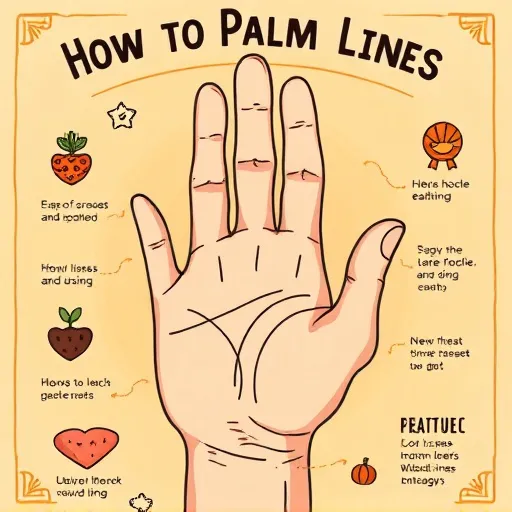
Then there's the skin texture and the lines themselves. This is where most beginners want to start, and it's the heart of how to read palm lines for beginners. There are three major lines that nearly everyone has, plus a few minor lines worth knowing. Let's break each one down.
The Heart Line, Head Line, and Life Line: Your Beginner Palm Lines Cheat Sheet
The heart line is usually the topmost of the major lines, running horizontally across the upper palm just below the fingers. It's associated with emotional life — how you give and receive affection, how you process feelings, and what you value in relationships.
- Long and curved: Often linked to an expressive, emotionally open nature.
- Short and straight: Sometimes associated with a more reserved or practical approach to emotions.
- Deeply etched: Suggests strong emotional intensity.
- Faint or broken: Can indicate emotional fluctuations or a more guarded heart.
Beginners often over-interpret breaks in the heart line. In practice, a small break usually just means a period of change or a shift in perspective — nothing dramatic. This is one of the first lessons in how to read palm lines for beginners: resist the urge to dramatize.
The head line sits just below the heart line and runs roughly horizontally across the middle of the palm. It connects to thinking style, intellect, and decision-making.
- Long head line: Often associated with curiosity and analytical thinking.
- Short head line: Can suggest a direct, action-oriented mindset.
- Curved head line: Sometimes linked to creativity and imagination.
- Straight head line: Associated with logical, structured thinking.
Pay attention to where the head line begins, too. If it starts joined with the life line, some readers note a strong sense of family influence in early life. If it starts separately, it can suggest early independence. Details like this are exactly what separates a shallow reading from a thoughtful one when you're learning how to read palm lines for beginners.
The life line curves around the fleshy base of the thumb (the mount of Venus, though you don't need to memorize that term yet). Despite the name, it does not predict how long you'll live. Instead, it's traditionally associated with vitality, energy levels, and major life transitions.
- Long, sweeping curve: Often linked to strong energy and resilience.
- Short or shallow: Can suggest a need to manage energy carefully, or a life path with frequent changes.
- Multiple fine lines nearby: Sometimes read as supporting influences or additional sources of strength.
This is one of the most misunderstood palm lines for beginners. Remember: a short life line does not mean a short life. It's about energy and life force, not lifespan. Getting this straight early on will save you from a lot of awkward readings as you practice how to read palm lines for beginners.
Fate Line, Sun Line, and Relationship Lines: Minor Palm Lines Worth Knowing
Once you're comfortable with the big three, you can start hunting for these supporting lines. Not everyone has them clearly visible, and that's completely normal. The fate line runs vertically up the center of the palm, from the base toward the middle finger. It's associated with career direction, sense of purpose, and external influences on your path. A strong, unbroken fate line is often read as steady career momentum, while a faint or fragmented one can suggest a more self-directed or flexible journey.
The sun line, when present, runs vertically below the ring finger. It's traditionally linked to creativity, recognition, and personal satisfaction. Many people don't have a visible sun line, and that's not a negative sign — it simply means other themes take priority. And those small horizontal relationship lines on the edge of the palm below the pinky? Beginners love asking about them, but keep expectations realistic: they're generally read as significant relationship influences, not literal wedding dates. The number of lines doesn't equal the number of marriages.
A Step-by-Step Beginner Routine for Reading Palm Lines on Both Hands
Here's a simple routine you can follow every time you read a hand. It keeps you organized and stops you from jumping to conclusions while you're still learning how to read palm lines for beginners.
- Observe the overall hand. Hand shape, skin texture, temperature, and finger length. Take a mental snapshot.
- Identify the three major lines. Find the heart line, head line, and life line. Trace each one slowly with your eyes.
- Note the quality of each line. Is it deep or shallow? Long or short? Continuous or broken? Curved or straight?
- Look for the minor lines. Check for a fate line, sun line, and any small relationship lines on the edge of the palm.
- Compare both hands. Note differences between the dominant and non-dominant hand.
- Synthesize, don't isolate. A single line never tells the whole story. Combine your observations into a coherent picture.
- Share gently. Frame everything as possibility, not certainty. Use phrases like "this often suggests" or "some readers interpret this as."
This routine takes about five to ten minutes once you're practiced. For beginners, give yourself fifteen minutes and don't stress about getting everything "right" — the whole point of how to read palm lines for beginners is progress, not perfection.
Common Beginner Mistakes, Ethics, and Mindset for New Palm Readers
Let's talk about what to avoid. Reading only one hand means you'll miss half the picture. Over-focusing on breaks is another classic trap — small breaks are extremely common and usually minor. Making absolute predictions is a big no; avoid saying "you will" or "this means," and stick to softer, exploratory language. Ignoring the rest of the hand is a mistake too, since palm lines don't exist in isolation — hand shape and finger structure matter. And of course, reading in poor light will have you missing faint lines and misreading deep ones.
Ethics deserve real space here, because palm reading carries responsibility even at a beginner level. Never predict health, death, or disaster — it's unethical and inaccurate. Frame readings as reflection, not fate, and emphasize personal agency. Be kind: if you see something that could be interpreted negatively, find a constructive framing or leave it out. Respect privacy, and know your limits — you're a beginner, not a therapist or medical professional. Many respected voices in the field emphasize that palmistry at its best is a tool for conversation and self-discovery. It should leave people feeling more aware and empowered, not anxious or dependent.
Practicing Palm Reading Daily: Tips for Rapid Improvement and Building Your Toolkit
The fastest way to get better at how to read palm lines for beginners is simply to practice — a lot. Start with your own hands, since you know your own personality and can test interpretations against reality. Practice on willing friends and family and ask for feedback: did your reading resonate? What felt off? Keep a palm journal where you sketch the lines you see and note your interpretations — over months, you'll spot patterns in your reading style. Take photos (with permission) for study, and compare them over time to recognize subtle line variations. Study hand shape alongside lines, because many beginners skip this and struggle later.
Your toolkit doesn't need to be fancy: a magnifying glass for fine lines, a small notebook or journal for sketches, a good light source (natural daylight ideally), a quick-reference chart of the major lines, and a calm, curious mindset — honestly, the most important tool of all. If you want structured learning, look for beginner-friendly workshops or online courses taught by reputable practitioners. In 2026, there's a growing community of wellness educators offering accessible introductions to palmistry. As one experienced practitioner put it, "The best readers are the ones who never stop being curious students." That curiosity is the real secret to how to read palm lines for beginners.
Quick recap: Learn the three major lines first (heart, head, life), add minor lines gradually (fate, sun, relationship), read both hands, avoid absolute predictions, and always approach readings with kindness and respect. Practice consistently, keep a journal, and enjoy the journey of how to read palm lines for beginners.