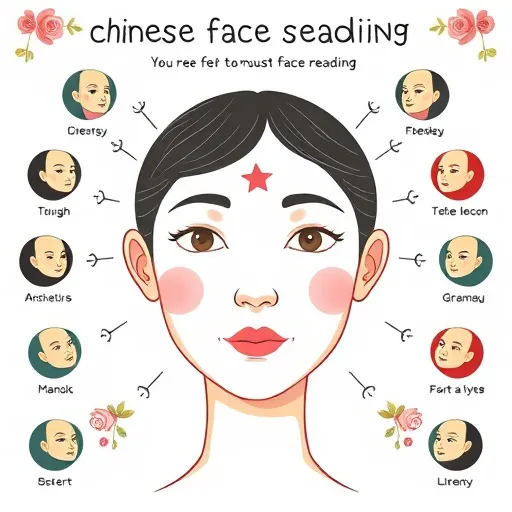
Chinese face reading
What Is Chinese Face Reading, Exactly?
Chinese face reading — scholars usually call it physiognomy — is a practice that goes back thousands of years. The whole idea rests on a simple premise: your facial features, your proportions, and the underlying bone structure all mirror your inner character, your temperament, and your general life tendencies. It's not crystal-ball fortune-telling. Think of it more like a visual personality assessment tool that generations of practitioners refined over centuries. And honestly? Once you understand how to read face shapes in chinese face reading, you start noticing details you never paid attention to before.
At its core, this tradition chops the face into distinct regions — the forehead (career and intellect), the eyes and brows (emotion and social nature), the nose (wealth and ambition), the mouth (communication and relationships), and the jaw (willpower and foundation). Face shapes pull all of these pieces together into one holistic picture. A skilled practitioner never stares at a single feature in isolation; they read the entire landscape. That's the heart of how to read face shapes in chinese face reading — you're looking at the whole composition, not just the parts.
Here in 2026, this old practice has picked up fresh relevance. With personality frameworks and self-awareness tools absolutely booming, face reading offers something a little different: a non-verbal, instantly accessible way to understand temperament. Some career coaches even slip it into team-building workshops as a supplementary tool. Whether or not you buy into the metaphysics, the observational skills it teaches are genuinely useful — and that's exactly why so many people are searching for guides on how to read face shapes in chinese face reading right now.
The Core Face Shape Categories and Elemental Associations You Need to Know
Traditional Chinese face reading recognizes several primary face shapes, each carrying its own five elements association and personality profile. Most real faces are hybrids — combinations of two or more types — but learning the core categories gives you a solid foundation for how to read face shapes in chinese face reading.
1. The Round Face (Water Element). Picture a face where the width and length are roughly equal, with soft, curved contours and full cheeks. That's the round face. In Chinese face reading, round faces tie to the water element — flexible, adaptable, and deeply social. People with round faces are traditionally seen as warm, approachable, and emotionally intelligent. They make friends easily and diffuse tension without even trying. The flip side? They can lean toward overindulgence and struggle with boundaries. From a wellness angle, practitioners often suggest round-faced folks watch their diet and stay active, since the water element links to fluid retention and sluggishness when out of balance.
2. The Square Face (Earth Element). A strong, broad jawline with a forehead of similar width defines the square face. This is the earth element — grounded, reliable, unshakeable. If you know someone who's the "rock" of their friend group, odds are they've got a square face. These individuals are traditionally associated with determination, practicality, and leadership. They're doers, not dreamers. In career readings, this shape often links to entrepreneurship and roles requiring stamina. The shadow side? Stubbornness and rigidity. The advice: cultivate flexibility — life isn't a battle to win, it's a garden to tend. This kind of nuance is what makes how to read face shapes in chinese face reading so rewarding.
3. The Oval Face (Wood Element). Slightly longer than it is wide, with balanced proportions and a gently rounded jaw, the oval face is the classic "ideal" shape in plenty of beauty standards. In face reading, though, it carries the wood element — growth, ambition, and intellectual curiosity. Oval-faced people often come across as thoughtful, diplomatic, and naturally charming. They see the big picture. Traditional readings suggest they're well-suited to creative and strategic work. The caution here is overthinking — wood types can get stuck in their heads, analyzing instead of acting. Grounding practices and decisive routines keep them balanced.
4. The Rectangular or Long Face (Wood-Metal Blend). Noticeable length, strong straight lines, and a defined jaw push a face into rectangular territory. This shape blends wood's ambition with metal's precision. Long-faced people are often deep thinkers — analytical, principled, sometimes a bit reserved. Readings link this shape to scholarly pursuits and careers demanding focus. These individuals value fairness and order. The challenge? They can seem distant or overly critical, so emotional warmth and spontaneity are areas to cultivate.
5. The Heart-Shaped Face (Fire Element). A wider forehead tapering to a narrow, pointed chin creates the heart shape — basically an inverted triangle with soft edges. Fire element energy runs hot here: passionate, expressive, magnetic. Heart-shaped faces are traditionally linked to charisma and creativity. These are the storytellers, the performers, the people who light up a room. But fire burns fast — practitioners often note that heart-shaped individuals need to manage burnout and emotional volatility. Rest isn't laziness; it's fuel.
6. The Diamond Face (Metal Element). High, wide cheekbones with a narrower forehead and chin define the diamond shape. Metal element types are sharp, discerning, and detail-oriented — they notice what others miss. This shape links to precision and high standards. Diamond-faced people often excel in fields requiring accuracy: research, engineering, editing, auditing. The shadow side is perfectionism and a tendency toward worry. Learning to let go is their lifelong lesson.
A Step-by-Step Beginner Method for Reading Face Proportions and Jawlines
Okay, theory is great, but how do you actually put this into practice? Here's a practical method any beginner can use when learning how to read face shapes in chinese face reading.
Step 1: Observe the overall proportion. Compare the length of the face to its width. Roughly equal? That points to round or square. Noticeably longer? Oval or rectangular. Wider at the top and narrow at the bottom? Heart. This first glance gives you your starting category.
Step 2: Trace the jawline. The jaw is the anchor of the face. A soft, curved jaw points toward round or oval. A sharp, angular jaw suggests square or rectangular. A pointed chin hints at heart or diamond. Run your eyes along the jawline — it reveals a lot about willpower and follow-through.
Step 3: Check the cheekbones. Prominent, high cheekbones are a diamond signature. Full, rounded cheeks suggest round or heart. Flatter cheekbones often accompany rectangular or oval shapes. In face reading, cheekbones relate to social power and presence.
Step 4: Look at the forehead. A broad forehead paired with a narrow chin creates the heart shape. A forehead equal in width to the jaw suggests square or rectangular. The forehead represents early life and intellect — its proportion matters as much as its shape.
Step 5: Consider the whole, not just the parts. Here's where beginners go wrong: they fixate on one feature. Real practitioners blend all observations. Most people don't fit neatly into one category — a round-square hybrid or an oval-heart combo is totally normal. Read the dominant shape first, then note the secondary influences. That layered approach is the real secret to how to read face shapes in chinese face reading.
What Face Shapes Reveal About Personality Traits and Career Paths
Let's translate the shapes into practical insight. Keep in mind: these are tendencies, not verdicts. Face reading is a lens, not a lock.
- Round (Water): Social, adaptable, empathetic. Thrives in people-facing roles — hospitality, counseling, sales. Watch for people-pleasing.
- Square (Earth): Reliable, determined, practical. Excels in management, operations, entrepreneurship. Watch for stubbornness.
- Oval (Wood): Diplomatic, thoughtful, ambitious. Suited to strategy, design, consulting. Watch for overthinking.
- Rectangular (Wood-Metal): Analytical, principled, focused. Fits research, law, engineering. Watch for emotional distance.
- Heart (Fire): Charismatic, creative, expressive. Thrives in media, performance, marketing. Watch for burnout.
- Diamond (Metal): Precise, discerning, detail-driven. Excels in analysis, quality control, editing. Watch for perfectionism.
In modern career coaching, some professionals use these profiles as conversation starters — never as hiring criteria, obviously, but as a fun, reflective tool for team dynamics. A seasoned practitioner will always emphasize that face reading complements, never replaces, real assessment methods. That balanced attitude matters when you're exploring how to read face shapes in chinese face reading.
Common Misconceptions and Myths About Face Shape Fate and Balance
Before you start reading every face in the coffee shop, let's clear up a few myths.
Myth #1: Face shape determines your fate. No. It's a tool for self-reflection, not a prophecy. Your choices, habits, and environment matter infinitely more.
Myth #2: There are only a few "good" face shapes. Every shape has strengths and challenges. Traditional texts actually emphasize balance over shape — a harmonious face is valued more than a "perfect" one.
Myth #3: Face reading can replace professional advice. Absolutely not. Medical, psychological, and financial decisions belong with qualified professionals. Face reading is a cultural and observational practice, not a diagnostic one. Anyone teaching how to read face shapes in chinese face reading should say this upfront.
Myth #4: You can read someone's character instantly. Skilled reading takes time, context, and multiple observations. A quick glance gives you a hypothesis, not a conclusion.
Blending Traditional Physiognomy with Modern Self-Awareness and Wellness Tools
Here's where 2026 gets interesting. Face reading is finding unexpected synergy with contemporary personality frameworks. Wellness practitioners and coaches increasingly blend traditional physiognomy with modern self-assessment tools — not to replace them, but to add a visual, intuitive layer. For example, someone who identifies as an introverted analytical type might discover their diamond face shape reinforces that self-perception. That alignment feels validating. Conversely, a mismatch — say, a highly social person with a rectangular face — can spark useful reflection: "Am I operating against my natural grain, or have I simply grown beyond my tendencies?"
The key is curiosity, not certainty. Use face reading as a mirror, not a mold. The face is a map, but you're the one driving. And the more you practice how to read face shapes in chinese face reading, the richer that map becomes.
Practical Observation Tips for Beginners Learning Facial Proportion Analysis
- Practice on yourself first. Grab a mirror, good lighting, and trace your own proportions. Familiarity with your own face builds your observational eye.
- Use photos with neutral expressions. Smiles distort jawlines and cheekbones. A relaxed, straight-on photo works best.
- Learn the five elements. Water, earth, wood, fire, metal — understanding these associations deepens every reading you do.
- Don't rush to conclusions. Observe, note, and revisit. A face read on Monday might look different after a week of practice.
- Respect boundaries. Reading friends' faces for fun is fine; diagnosing strangers or using readings to judge people is not. Ethics matter.
If there's one takeaway from traditional face reading, it's this: no single shape is superior. The classical texts consistently emphasize balance and proportion over any specific category. A face where features harmonize — where no single element dominates excessively — is traditionally considered the most fortunate, regardless of whether it's round, square, or diamond. The round face's warmth, the square face's grit, the heart shape's spark — each contributes something irreplaceable. Face reading, at its best, helps us appreciate that diversity, starting with our own reflections.
Learning how to read face shapes in chinese face reading is a journey, not a destination. Start with the six core shapes, practice your observations, and stay curious. The practice rewards patience — the more faces you study, the more nuanced your readings become. And remember: this is a tool for insight, not judgment. The most skilled practitioners are the most humble ones — they know that a face offers clues, not conclusions. Whether you're exploring this for personal growth, cultural curiosity, or just a fascinating conversation starter at dinner parties, how to read face shapes in chinese face reading offers a uniquely human way to connect — with yourself and with others.